Skip to main content Skip to search Skip to main navigation
Highest Quality ‒ English speaking customer service ‒ Short delivery times
Dealers
Banner with employees wearing BP® HACCP clothing for food hygiene.
DIN 10524

Standard DIN 10524 

Food hygiene - Workwear in food businesses 

In view of growing consumer demands and global trade networks, there was a need for a uniform standard to minimise the risk of contamination from inadequate workwear. Against this background, DIN 10524 was created, which is essential for food hygiene and workwear in food businesses. This is because it specifies the requirements for suitable and clean workwear. 

The DIN 10524 standard not only contains hygiene requirements, but also provides recommendations for the selection, use and cleaning of clothing. The standard-compliant workwear is largely determined by the hygienic risk in the respective food production.

A woman and a man standing next to each other wearing light blue HACCP work clothes and smiling.

Questions and answers about EN 10524* 

What is EN 10524? 

DIN standard 10524 describes the legal requirements for workwear in food production. It explains how workwear for the food sector should be manufactured, selected, used and reprocessed, taking into account the specific requirements of each workplace.

The objective is to avoid negative influences on food caused by inappropriate workwear and to optimise hygiene when handling food. The DIN 10524 standard therefore helps food manufacturers, textile service providers and textile cleaning companies to comply with the legal requirements and thus makes it easier to maintain hygienically perfect conditions when handling food with regard to workwear. 

Here you will find a large selection of DIN 10524-compliant workwear for food businesses.


How can DIN 10524 be integrated into existing HACCP systems? 

DIN 10524 can be seamlessly integrated into existing HACCP and ISO systems by anchoring it as an additional control point in the risk analysis and hazard assessment. In HACCP concepts, for example, the special requirements for workwear are taken into account as a preventative measure to identify and specifically control potential sources of contamination. 

Within ISO-certified quality management systems, compliance with DIN 10524 can be checked as part of regular internal audits and management assessments. By creating specific SOPs (Standard Operating Procedures) for selection, cleaning and change intervals, the standard-compliant handling of workwear is documented and continuously improved. In this way, the standard not only supports compliance with legal requirements, but also contributes to the optimisation of overall food hygiene.


Thumbnail 1
Thumbnail 2
Thumbnail 3
Thumbnail 4
Thumbnail 5
Thumbnail 6
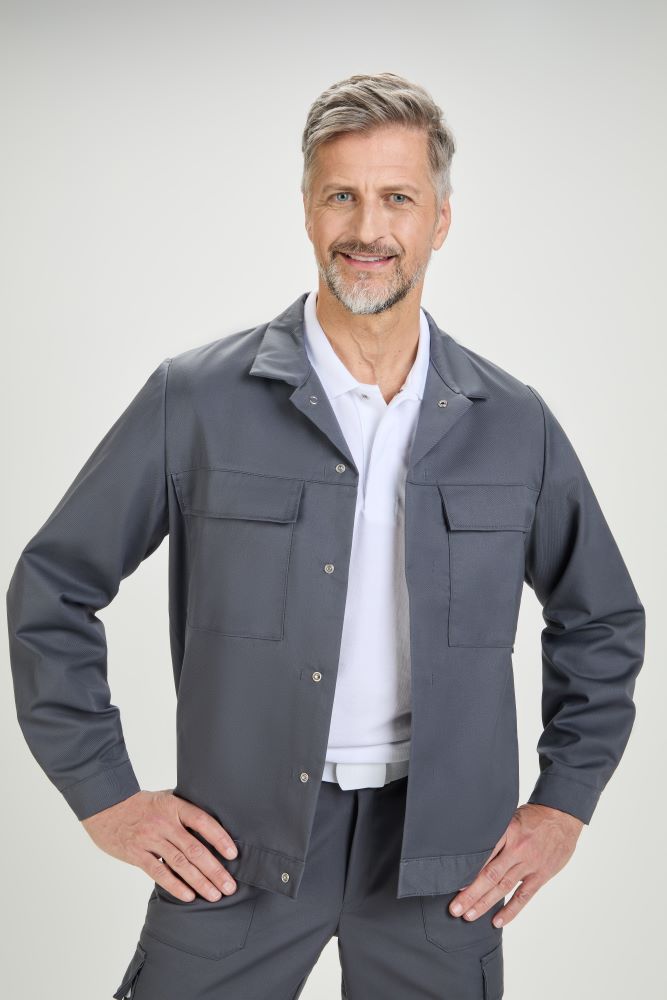
A man wears Haccp clothes in grey and looks into the camera with his hands on his pelvis.

What risk classes are there in DIN 10524? 

How workwear must be equipped depends primarily on the hygienic risk in the production of food. A distinction is made between the following three risk classes:


DIN 10524 - Risk class 1: 

  • Low requirement for the protective function of work clothing (low hygiene risk): Handling of non-perishable foodstuffs or ingredients. The product is processed or washed by the manufacturer or consumer. Change of workwear in food production in class 1 is usually weekly, an earlier change may be necessary if soiled. 
  • Areas of application Risk class 1: Use in the pharmaceutical, cosmetics or food industry, e.g. fruit, vegetables, fresh fish, flour (grinding) herbs, spices, packaged frozen food, pasta, jars, cans.


DIN 10524 - risk class 2: 

  • High protective function of work clothing required (high hygiene risk): Handling of unpackaged, perishable foodstuffs or ingredients. Especially if food is not further processed and microorganisms can multiply in or on it. Work clothing should generally be changed daily, but may need to be changed earlier if soiled. 
  • Areas of application Risk class 2: Use in the pharmaceutical, cosmetics or food industry, e.g. unpackaged food, sausage, cheese, salads, cakes, soft drinks, alcoholic drinks, confectionery, salting/smoking, fermenting, preserving.


DIN 10524 - risk protection class 3: 

  • Very high protective function of work clothing must be ensured (highest hygiene risk): Handling of unpackaged, edible, perishable food (which is no longer heated). Change of workwear in food production in class 3 on a daily basis; if soiled, it must also be changed in between. 
  • Areas of application Risk class 3: Use in the pharmaceutical, cosmetics or food industry, e.g. fish, tartare, ready-made salads, chilled ready meals, ice cream, dairy products.

Overview of risk classes according to DIN 10524

The selection of workwear should always be based on the relevant hygiene risk and the operational requirements of the company.

Overview of risk classes, requirements and change frequency
Risk class Hygiene risk Typical activities / products Workwear requirements Change frequency
Risk class 1 Low Handling packaged food or activities in peripheral areas of production Hygienic workwear with basic requirements regarding cleanliness and functionality Regularly and as needed
Risk class 2 Medium Processing sensitive, unpackaged food with increased hygiene requirements Workwear with increased hygiene requirements to reduce contamination risks Frequently, depending on activity and degree of soiling
Risk class 3 High Activities in particularly sensitive areas, e.g. with highly perishable or critical unpackaged foods Particularly hygiene-appropriate workwear with high requirements regarding construction, protective performance and professional reprocessing Very frequently in line with strict hygiene requirements

Risk class 1

Low

Typical activities / products
Handling packaged food or activities in peripheral areas of production
Workwear requirements
Hygienic workwear with basic requirements regarding cleanliness and functionality
Change frequency
Regularly and as needed

Risk class 2

Medium

Typical activities / products
Processing sensitive, unpackaged food with increased hygiene requirements
Workwear requirements
Workwear with increased hygiene requirements to reduce contamination risks
Change frequency
Frequently, depending on activity and degree of soiling

Risk class 3

High

Typical activities / products
Activities in particularly sensitive areas, e.g. with highly perishable or critical unpackaged foods
Workwear requirements
Particularly hygiene-appropriate workwear with high requirements regarding construction, protective performance and professional reprocessing
Change frequency
Very frequently in line with strict hygiene requirements

Note: The specific selection of workwear should always be based on the individual hygiene risk and the company’s operational processes.


FAQ: DIN 10524 – Workwear in food businesses

Short, buyer-relevant answers on DIN 10524 in the context of HACCP clothing.

What exactly does DIN 10524 regulate (scope)?

The standard focuses on the minimisation of contamination risks caused by workwear and derives requirements for construction, functionality and fabric from this. It helps companies plan clothing on a risk-based basis and use it safely in everyday operations.

DIN 10524 vs. HACCP: what is the difference?

HACCP is a comprehensive hygiene concept for analysing and controlling hazards in food businesses. DIN 10524, by contrast, focuses specifically on workwear and defines requirements that help minimise contamination risks caused by clothing. DIN 10524 can therefore be used as a practical addition within an HACCP concept.

Is DIN 10524 a legal requirement or a standard?

DIN 10524 is a standard, not a law. It serves as guidance for companies to systematically implement hygiene-related requirements for workwear in food businesses. In practice, it can help make company hygiene concepts traceable and risk-based.

Which clothing is suitable for which risk class?

The appropriate clothing depends on the relevant hygiene risk:

  • Risk class 1: hygienic workwear for areas with a lower contamination risk.
  • Risk class 2: workwear with increased hygiene requirements for more sensitive processes.
  • Risk class 3: particularly hygiene-appropriate clothing for highly sensitive areas with the highest requirements for contamination prevention.
Does BP® HACCP clothing comply with DIN 10524?

Yes. BP® HACCP clothing is designed as a hygiene clothing solution for risk classes 1–3 in accordance with DIN 10524 and meets the resulting requirements for construction, functionality and fabric.

How can DIN 10524 be integrated into existing HACCP and ISO systems?

DIN 10524 can be integrated seamlessly by anchoring it as an additional control point in risk analysis and hazard assessment. Within the HACCP concept, clothing requirements can be documented as a preventive measure in order to identify and specifically control potential sources of contamination.

Why is professional reprocessing important?

Workwear can only fulfil its hygienic function over the long term if it is professionally cleaned and reprocessed. Professional reprocessing helps ensure cleanliness, material functionality and a reproducible hygiene standard in day-to-day operations.

Why is suitability for industrial laundering (EN/ISO 15797) important in the DIN 10524 context?

Compliance with the standard must be reproducible in everyday use. That is why suitability for professional washing and finishing processes is an important building block. BP® tests HACCP clothing for washing properties in accordance with  ISO 15797 – for reliable reprocessing in textile service operations.

Is DIN 10524 a PPE standard (personal protective equipment)?

DIN 10524 is primarily a hygiene standard for workwear in food businesses. Its focus is on preventing adverse effects on food caused by clothing (contamination prevention) – not on classic PPE for protecting workers against workplace hazards.

Who is DIN 10524 particularly relevant for?

For all food businesses, for example in production, processing and packaging as well as in commercial kitchens and canteens, wherever workwear is an important factor in contamination prevention.

Is BP® clothing suitable for team outfitting (including customisation)?

BP® is ideal for team outfitting: many fits, colours and styles for women and men, a wide size range and customisation options (logo/name). For a specific offer, please send an email to info@bp-online.com.

*As these are shortened summaries of binding occupational safety standards, this article does not claim to reproduce all requirements defined in those standards in full. Although this article is regularly reviewed by our experts, we do not guarantee the currency or accuracy of the information.

Thumbnail 2
Thumbnail 3
Thumbnail 4
Thumbnail 5
Thumbnail 6
Thumbnail 7
DIN 10524
Workwear for food companies
You want to equip an entire team or company with PPE and need support in selecting and compiling protective clothing that conforms to standards?
Get a quote
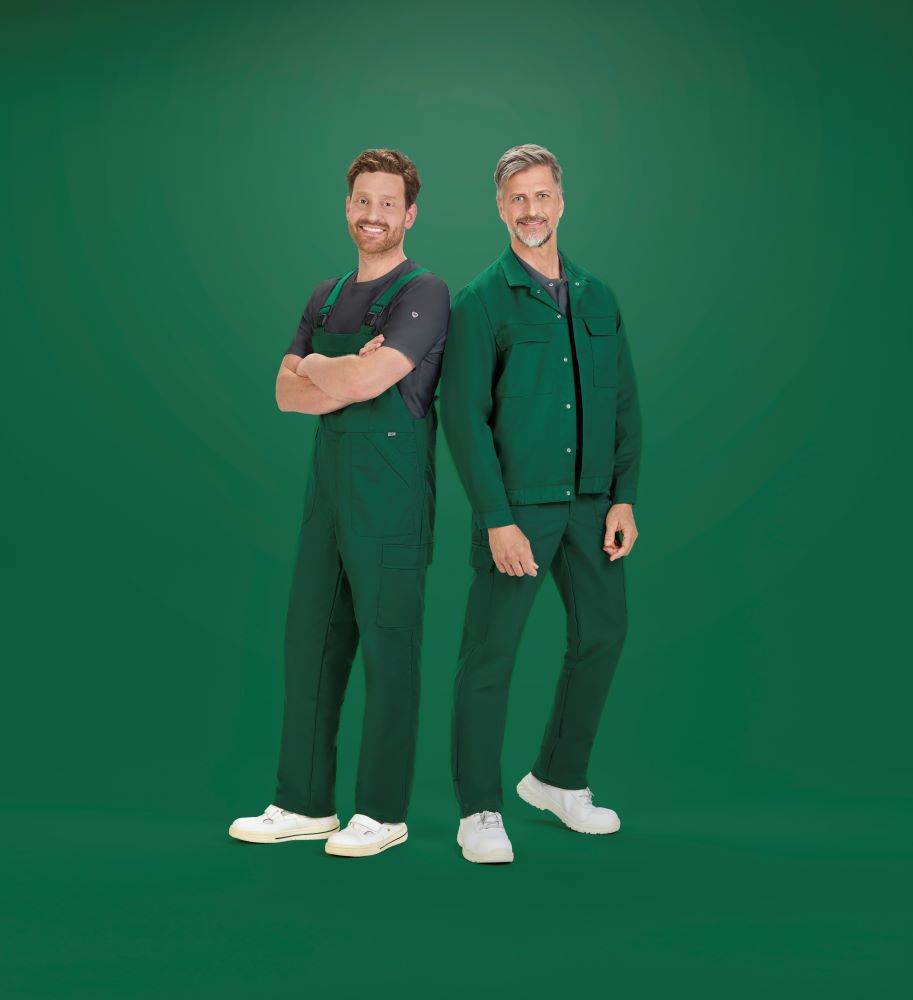
Two men standing next to each other are wearing HACCP clothing in green.
BP® NEWSLETTER
SPECIAL OFFERS, PROMOTIONS, NEW PRODUCTS AND MUCH MORE
Subscribe to our newsletter now and you'll be the first to receive all the information about sales promotions, new products or special online offers.
Subscribe to newsletter
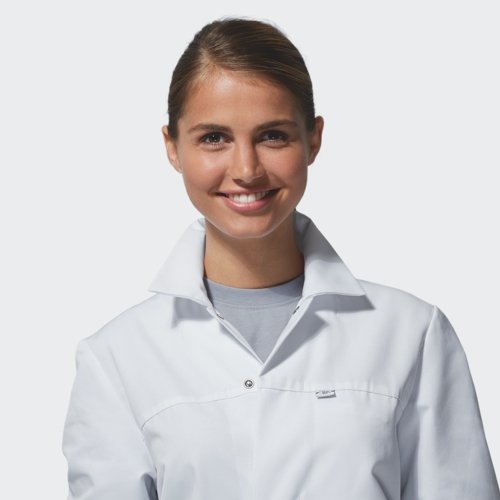
A woman wears white HACCP work clothes and smiles at the camera.