Skip to main content Skip to search Skip to main navigation
Highest Quality ‒ English speaking customer service ‒ Short delivery times
Dealers
Banner with employees in BP® protective clothing (PPE).

FAQ: High-visibility jackets – Everything you need to know

Published on 01.12.2025

Table of contents

1. Basics: understanding high-visibility jackets

2. Standards and safety classes

3. Functional features and ergonomics

4. Care, durability and industrial laundering

5. Weather protection and fields of application

6. Additional protection for specific risks

7. Costs and responsibilities

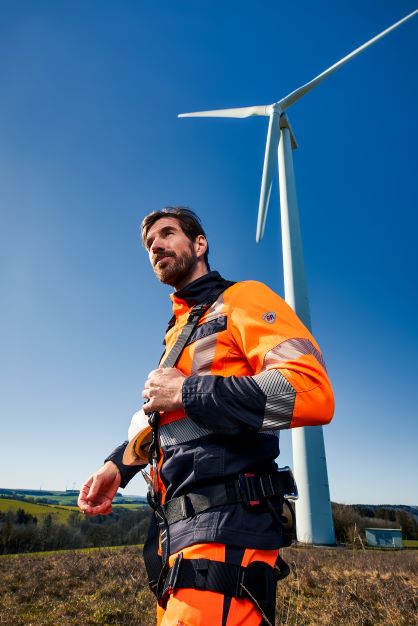
A man wears Multinorm protective clothing in orange and black. A wind turbine can be seen in the background.

1. Basics: understanding high-visibility jackets

What is a high-visibility jacket (Hi-Vis jacket)?

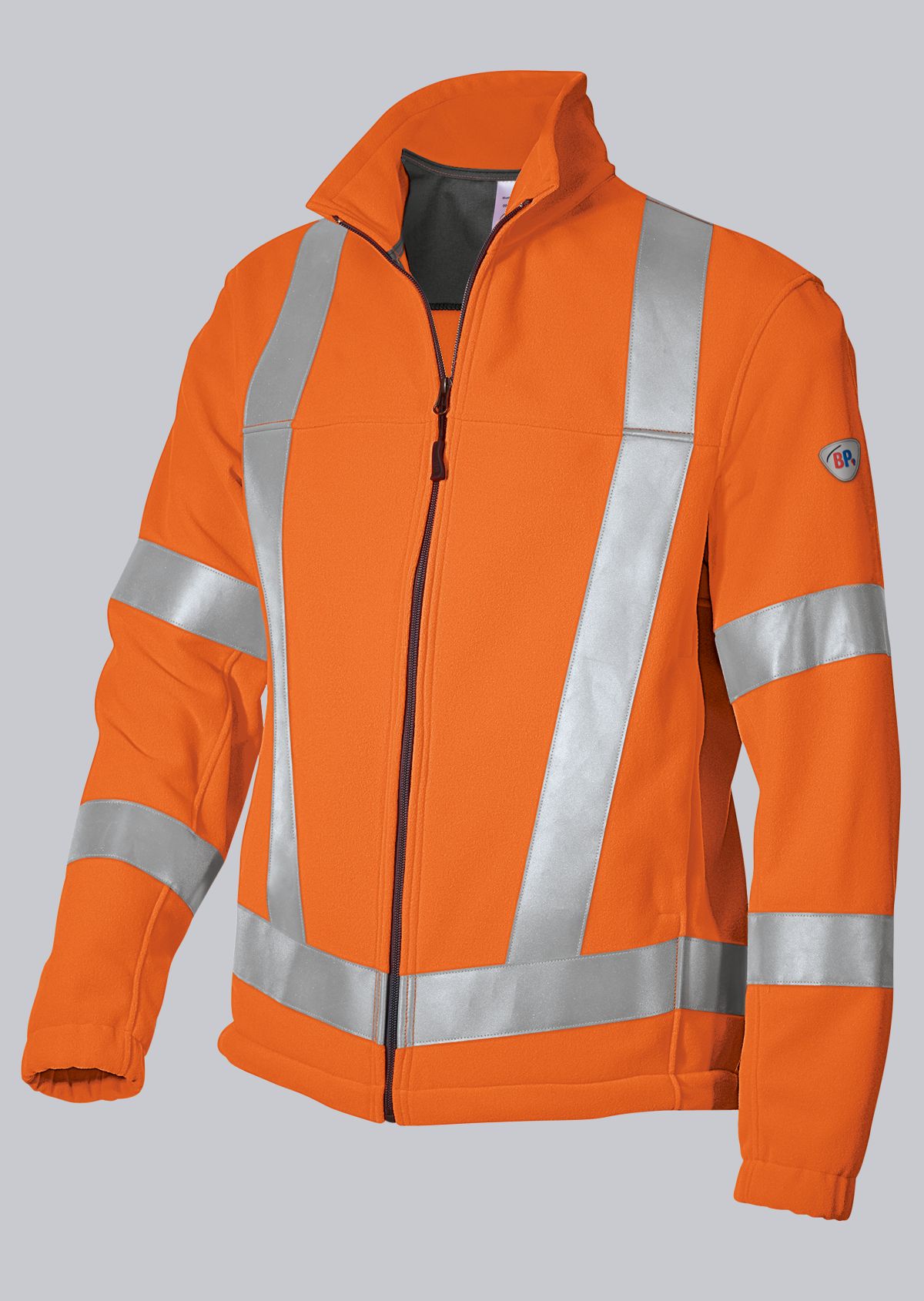
A high-visibility jacket – also called a warning jacket or Hi-Vis jacket – ensures that you remain visible at work. It combines fluorescent materials with retro-reflective strips so you can be seen better during the day, at dusk and in the dark. Hi-Vis jackets are used wherever low visibility creates a safety risk, such as in road construction, civil engineering, transport, rail environments or public areas. Here you can find an overview of BP® high-visibility jackets.

2. Standards & safety classes

Which standard must a high-visibility jacket meet?

High-visibility jackets must comply with the EN ISO 20471 standard, sometimes referred to as EN 20471. This standard defines:

  • the required minimum amount of fluorescent material,
  • the number and placement of retro-reflective strips,
  • the visibility class achieved (class 1–3).

Depending on the BP model, a Hi-Vis jacket reaches class 2 or class 3, fulfilling the requirements for certified EN 20471 jackets. Learn more about the standard here:  EN ISO 20471.

Which visibility class is the right one?

The suitable class for your Hi-Vis jacket depends on your working environment:

  • Class 1: basic visibility for low-risk areas
  • Class 2: enhanced visibility for everyday use
  • Class 3: maximum visibility, e.g. in traffic or night work

Many BP models achieve class 3 – either as a single jacket or in combination with other high-visibility garments certified to EN ISO 20471.

Thumbnail 1
Thumbnail 2
Thumbnail 3
Thumbnail 4
Thumbnail 5
Thumbnail 6
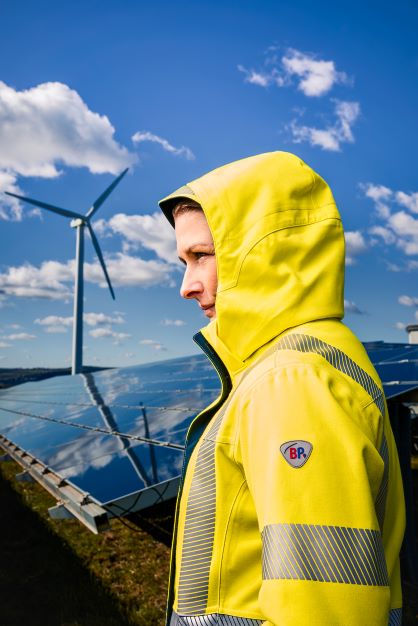
A woman wears multi-standard protective clothing with a neon yellow hood. In the background is a solar installation.

3. Functional features & ergonomics

What does BP® BodyLanguage mean?

BP® BodyLanguage describes the placement of retro-reflective strips along the natural body silhouette. This makes the body shape more clearly recognisable and improves 360° visibility – even from above or at greater distances. In complex work environments, this provides an important safety advantage for all wearers.

What is the difference between high-visibility jackets with and without stretch?

Stretch high-visibility jackets such as BP® Hi-Vis Stretch offer greater freedom of movement and increase comfort during tasks that require bending, kneeling or working overhead. The Hi-Vis jacket remains dimensionally stable and supports dynamic motion – ideal for people who move a lot while relying on consistent, reliable visibility.

Do high-visibility jackets also come in women’s fits?

Yes. Many BP high-visibility jackets are available in specially developed women’s fits: women’s Hi-Vis jacket. These Hi-Vis jackets offer an ergonomic cut, promote freedom of movement and increase comfort – especially important for wearers who use their protective clothing for long hours.

How do I find the right size?

BP size charts help you match your body measurements with the correct jacket size. BP offers regular, short and long sizes. For teams or larger orders, sample fittings are recommended to assess fit and freedom of movement under real working conditions.

4. Care, durability & industrial laundering

Are BP high-visibility jackets suitable for industrial laundering?

Yes. Many BP high-visibility jackets and Hi-Vis styles are tested according to EN ISO 15797 and carry the PRO label (EN ISO 30023). This indicates which washing and drying processes are suitable. Visibility, colour and material performance remain stable even after many laundering cycles – an important factor for textile service providers and professional users.

Thumbnail 1
Thumbnail 2
Thumbnail 3
Thumbnail 4
Thumbnail 5
Thumbnail 6
A waste management employee stands outside in matching work clothes.

5. Weather protection & fields of application

Do high-visibility jackets also offer protection in bad weather?

Depending on the model, BP high-visibility jackets provide not only excellent visibility but also weather protection. BP covers various protection levels:

  • Softshell Hi-Vis jackets: windproof, water-repellent, breathable
  • Weather protection according to EN 343: waterproof, windproof, robust
  • Cold protection according to EN 14058: additional insulation in low temperatures

This keeps you protected from rain, wind, cold or changing weather conditions – without compromising the safety of an EN 20471-certified jacket.

Can I combine Hi-Vis jackets with other garments to achieve a higher class?

Yes. According to EN ISO 20471, many BP Hi-Vis garments can be combined to reach a higher visibility class. For example: a class 2 Hi-Vis jacket can reach class 3 when worn together with a matching Hi-Vis trousers. This creates a complete Hi-Vis outfit with maximum visibility.

6. Additional protection for specific risks

When is extra protection needed beyond high visibility?

Extra protection is required when additional risks are present besides low visibility, such as:

  • arc flash hazards,
  • welding protection,
  • heat & flame protection,
  • weather protection,
  • cold protection,
  • protection against chemical splashes,
  • antistatic requirements.

In such cases, multinorm Hi-Vis jackets and protective multinorm clothing from the BP® Multi Protect Plus collection are used. They combine high visibility with additional PPE standards and support a holistic safety approach.

Thumbnail 1
Thumbnail 2
Thumbnail 3
Thumbnail 4
Thumbnail 5
Thumbnail 6
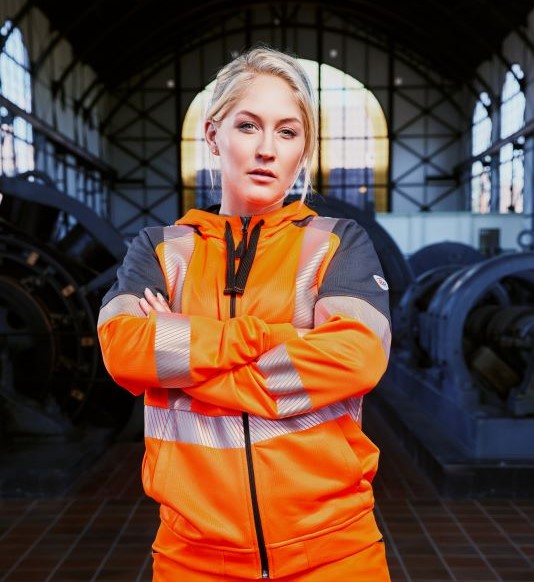
A woman wears hivis clothing for women in warning orange.

7. Costs & responsibility

Who is responsible for paying for high-visibility jackets?

As a rule, the employer is responsible for providing the required high-visibility jackets and covering the associated costs. This also includes proper cleaning and maintenance of the jackets.

This applies in particular to workplaces where specific protective clothing is legally required or where the risk assessment indicates that high-visibility clothing is necessary to ensure employee safety and health. High-visibility jackets are often part of this category – for example in construction, roadwork, energy supply, logistics or transportation.

Does this also apply when worn voluntarily?

If an employee chooses to wear a high-visibility jacket voluntarily, without this being required by law or company policy, the employer is generally not obliged to cover the costs.

Note: Regulations may vary depending on country, industry and company agreements.

Thumbnail 1
Thumbnail 2
Thumbnail 3
Thumbnail 4
Thumbnail 5
Thumbnail 6

Here you will find a selection of BP® high-visibility jackets.

High-visibility jackets and more

Do you want to equip your team with high-visibility clothing?


Contact us
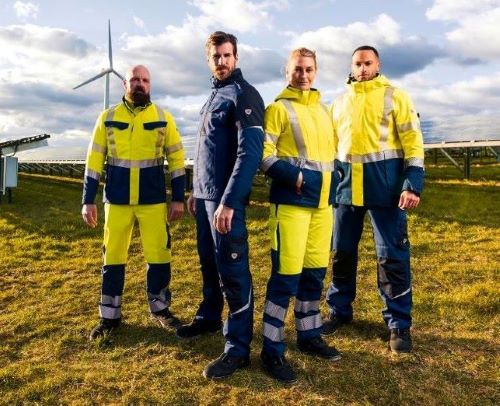
Four people in modern high-visibility work clothing in front of solar and wind turbines.