Skip to main content Skip to search Skip to main navigation
Highest Quality ‒ English speaking customer service ‒ Short delivery times
Dealers
Woman wearing a red BP® tunic in a care setting
Professional clothing in care
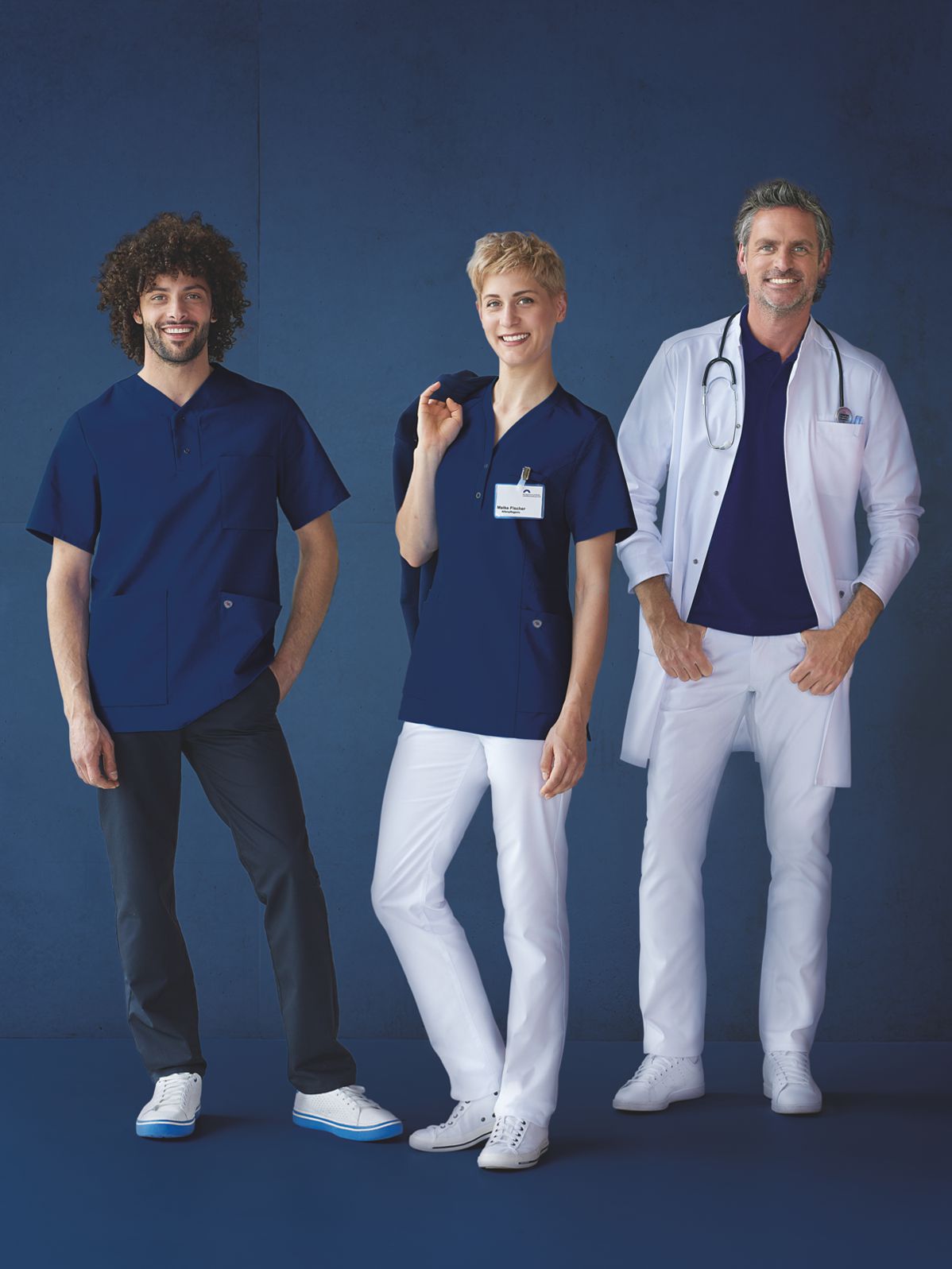
Two men and a woman pose in outfits for a hospital team.

Why workwear and laundry hygiene in nursing homes is more important than ever  

Professional workwear and laundry hygiene have become paramount in senior facilities - more so in the Covid pandemic than before. Workwear and their cleaning are central to hygiene management of every facility in the pursuit for infection control.

Specific aspects must be considered as should different models be weighted up. Those in responsible positions nedd to keep a set of criteria in mind. 

Thumbnail 1
Thumbnail 2
Thumbnail 3
Thumbnail 4
Thumbnail 5
Thumbnail 6
Two carers and one male carer in red and white nursing outfits.

What kind of workwear do care workers need?

Caregivers in nursing homes and other healthcare settings require a variety of workwear to ensure they are protected on the job. 

These include:

  • Protective clothing: This includes protective gowns, aprons and shoe coverings designed to guard against contamination. 
  • Gloves: Nurses wear disposable gloves for protection from infections and germs. 
  • Respirators: Masks protect caregivers from contracting infectious diseases.  
  • Shoes: Nurses usually wear closed shoes to guard against injury and contamination. 
  • Accessories such as wristwatches and jewellery, should be removed to prevent the spread of germs and infections.
  • Professional workwear: Nursing staff usually wear tunics, trousers, shirts and gowns that are easy to clean and disinfect and do not restrict movement. Professional workwear helps build patient confidence and convey a professional image. 
When selecting workwear, attention should be paid to washability, displayed on garment care labels. It needs to withstand rigorous hygienic laundering. Additional labelling - as with Pro-Label - ensures the item complies with ISO 15797 standard and is suitable for industrial washing.

Thumbnail 1
Thumbnail 2
Thumbnail 3
Thumbnail 4
Thumbnail 5
Thumbnail 6
Carer in light blue coat helps senior citizen to walk.

Protection against multiresistant bacteria

Today the importance of workwear and laundry hygiene in inpatient care are undisputed. The Covid pandemic has considerably heightened this awareness. Moreover, the increasing threat of multiresistant germs in the nonclinical sector had sensitised those responsible long before we were slammed by Covid 19.

It has been shown time and again: Measures in general and laundry hygiene as a component of every hygiene regime are fundamental means of infection protection. So, despite the importance of workwear and laundry hygiene, it remains one of many issues care facilities are tackling, though it often does not rank high on the priority list.

This is why certain questions repeatedly arise which stir up uncertainty: 

  • What do current rules regarding workwear and laundry hygiene actually stipulate?
  • What are the models of procurement and reprocessing concepts? 
  • What are their advantages?
  • What criteria must workwear meet for industrial laundering and hygiene processing?  
  • And finally: What do you have to look out for when purchasing workwear? 

We will clarify these questions here.
Thumbnail 1
Thumbnail 2
Thumbnail 3
Thumbnail 4
Thumbnail 5
Thumbnail 6
BP® NEWSLETTER
SPECIAL OFFERS, PROMOTIONS, NEW PRODUCTS AND MUCH MORE
Subscribe to our newsletter now and you'll be the first to receive all the information about sales promotions, new products or special online offers.
Subscribe to newsletter

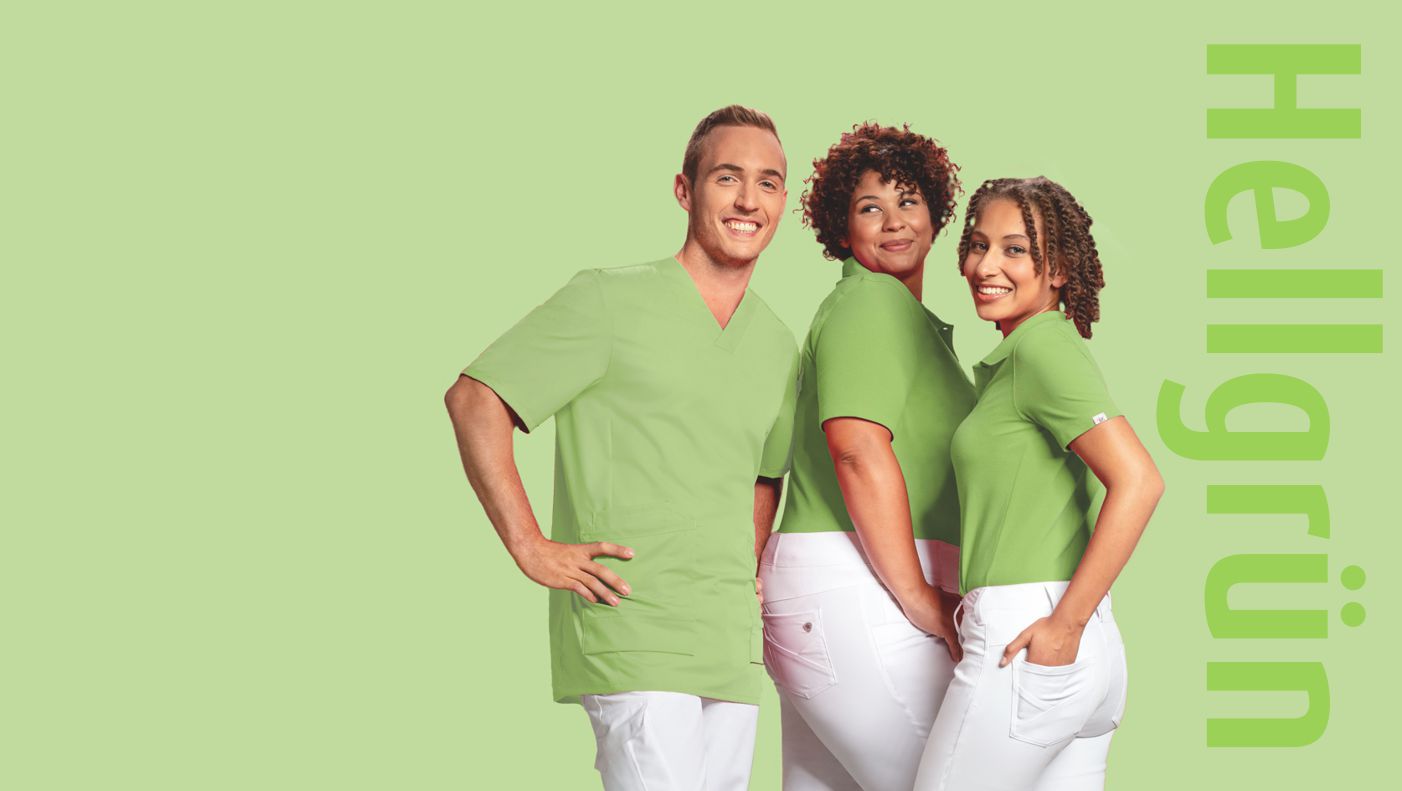
Two women pose in a clinic wearing light green scrubs.
Carer in light green coat helps senior citizen to walk.

Professional wear - not the same as protective wear

When speaking about clothing worn in care facilities, we need to distinguish between personal protective wear, professional wear and personal workwear.


Personal protective wear is intended to guard against contamination. It is provided by the employer based on a risk assessment and includes, for example, long-sleeved protective gowns, aprons and mouth-nose guards.

Frequently, these are single-use products that are disposed of immediately after use. In healthcare facilities, protective clothing is required, for example, for invasive measures such catheter insertion or when care workers are exposed to body fluids or excretions.

During the Covid 19 pandemic, the Robert Koch Institute (RKI) recommended protective wear be worn during "direct care of patients with confirmed or probable SARS-CoV-2 infection". In the event of an outbreak, "consideration should be given to donning PPE when caring for the entire affected ward". 

The legal basis of compulsory protective clothing are provided by the occupational health and safety regulations of employer liability insurance organisations, the TRBA 250 (Technical Rule "Biological Agents in Health Care and Welfare") and the Commission for Hospital Hygiene and Infection Prevention (KRINKO) of the RKI.

Thumbnail 1
Thumbnail 2
Thumbnail 3
Thumbnail 4
Thumbnail 5
Thumbnail 6
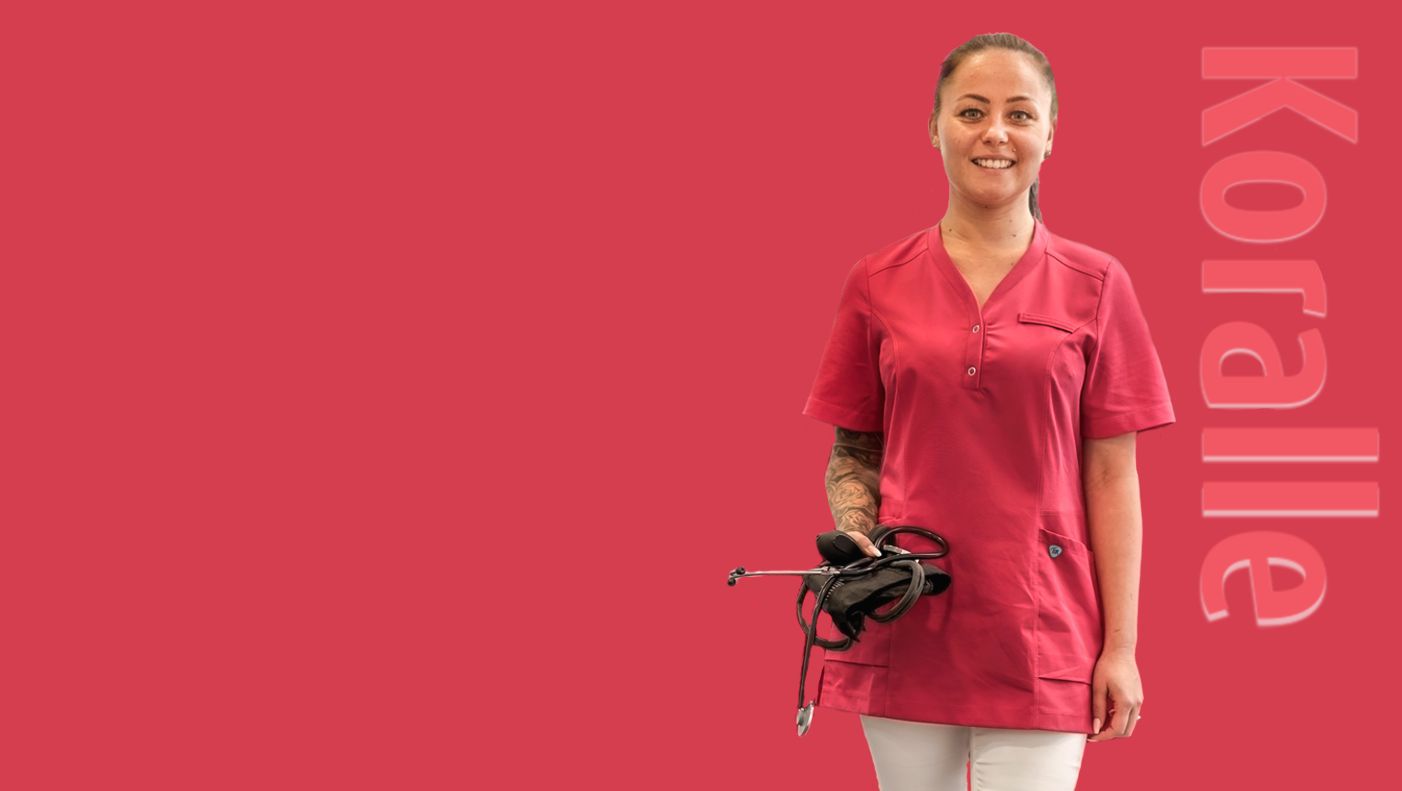
Carer in fuchsia smiles at the camera.

Workwear - Regular changes are necessary

Workwear - often also referred to as work or official wear - is worn instead of or in addition to personal clothing while on duty. In the nursing sector, it typically consists of trousers, T-shirts, polo shirts, gowns or jackets. 


Unlike protective wear, workwear does not have primarily function of protecting workers from contamination. The aim of workwear is to provide a uniform appearance, comfort, be light and ergonomic, in order to facilitate the work of care workers. Ideally, workwear, whose aim is to promote team cohesion and employee motivation, should be taken as a sign of appreciation by the employer.

For hygienic reasons, professional garments must not be worn outside the facility. According to the "clothing and protective equipment for nursing professions from a hygienic perspective" guideline in the section - Hygiene in outpatient and inpatient nursing and geriatric care/rehabilitation, of the German Society for Hospital Hygiene, they should be changed every two days, or more frequently if necessary.  

During the Covid pandemic, daily changes are recommended. As soon as clothes are visibly soiled, e.g., by blood, a change is necessitated. In this time, it is compulsory for garments to be washed and processed according to hygienic standards.

Thumbnail 1
Thumbnail 2
Thumbnail 3
Thumbnail 4
Thumbnail 5
Thumbnail 6
Any questions?
Do you still have questions about workwear for the care sector? Then get in touch with our experts.
CONTACT US

Two medical assistants wear light green scrubs and smile.